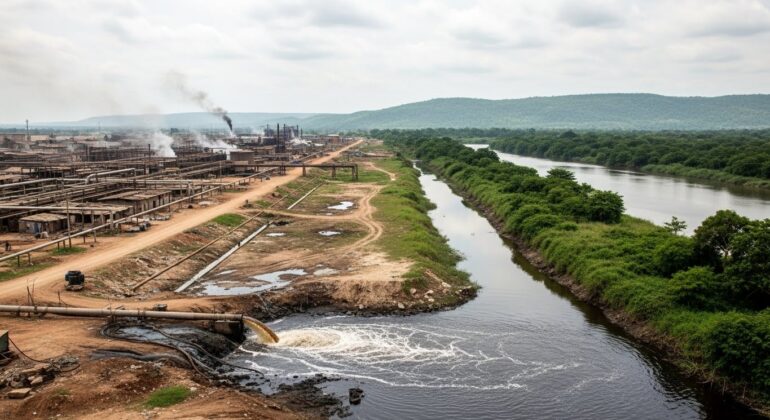

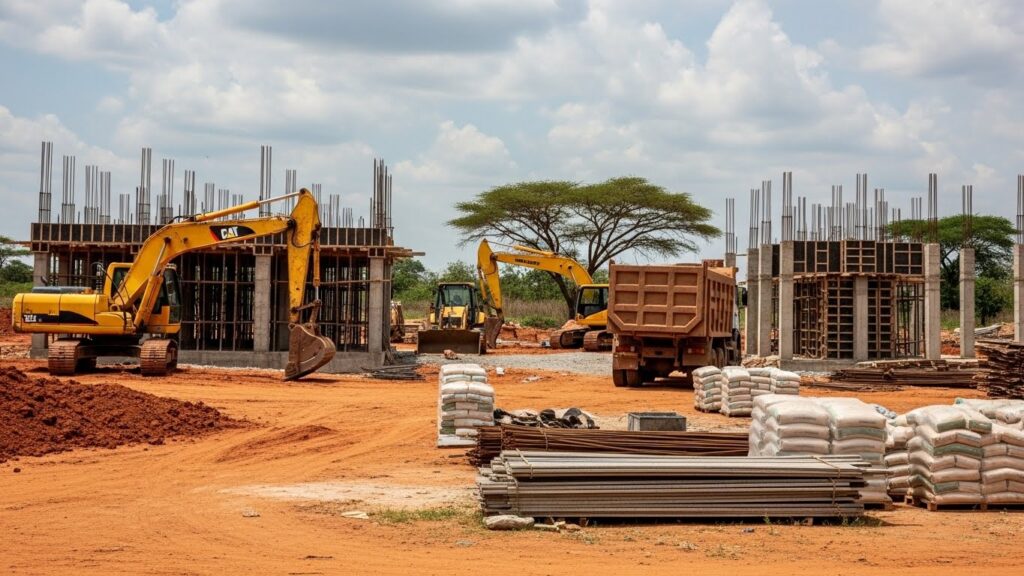
In recent years, several manufacturing and industrial facilities across Ogun State and other parts of Nigeria have been sealed by environmental authorities for commencing operations or construction without proper Environmental Impact Assessment (EIA) approval. In 2024 alone, the Ogun State Environmental Protection Agency (OGEPA) shut down multiple companies for environmental infractions linked to regulatory non-compliance, including failure to obtain required environmental approvals ogepa.og.gov.ng
Such enforcement actions often result in project shutdowns, financial losses, delayed equipment installation, and strained investor confidence as a result of treating environmental approval as a post-construction formality rather than a prerequisite.
Across Nigeria’s industrial corridors, similar enforcement actions by agencies such as the National Environmental Standards and Regulations Enforcement Agency (NESREA) highlight a recurring gap in project planning, where environmental obligations are overlooked until regulators intervene Businessday NG.
This guide explains what EIA means in the Nigerian context, who needs it, how the approval process works, timelines, common mistakes, and how engaging experienced consultants like Solo-May Geoservices can save time, cost, and regulatory stress.
What Is Environmental Impact Assessment (EIA)?
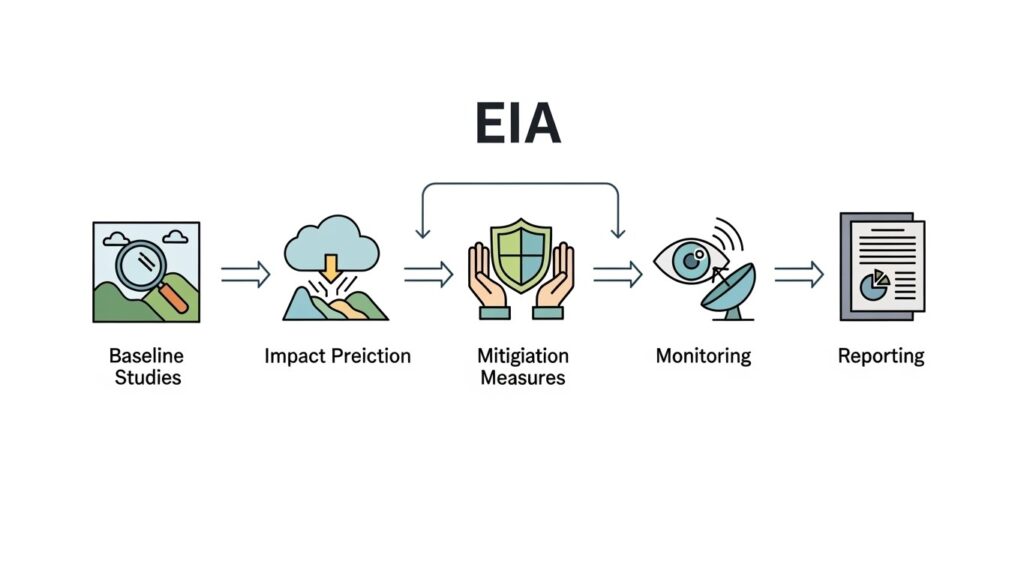
Environmental Impact Assessment is a systematic process used to identify, predict, and evaluate the ecological, social, and health impacts of a proposed project before it begins. In Nigeria, EIA ensures that development decisions strike a balance between economic growth, environmental protection, and community well-being.
EIA typically examines impacts on:
- Land and soil stability
- Surface and groundwater resources
- Air quality and noise levels
- Biodiversity and ecosystems
- Host communities and livelihoods
Legal Framework
The following key instruments govern Environmental Impact Assessment in Nigeria:
- Environmental Impact Assessment Act, Cap E12, Laws of the Federation of Nigeria, which mandates that the environmental effects of major projects must be assessed and approved before commencement, PLACNG.
- National EIA Procedures and Sectoral Guidelines, developed by the Federal Ministry of Environment (FMEnv), which classify projects and outline approval processes and documentation requirements.
- Under Nigerian law, no Category I or II project may commence without EIA approval from the Federal Ministry of Environment or the relevant state environmental authority ead.gov.ng.
- At the state level, governments such as Lagos State strictly enforce mandatory EIA clearance for physical developments, with official directives reaffirming that no project may proceed without prior environmental approval moelagos.gov.ng.
Under Nigerian law, no Category I or II project may commence without EIA approval from the Federal Ministry of Environment or the relevant state authority.
State governments such as Lagos also enforce mandatory EIA clearance for physical developments within their jurisdiction.
Projects That Require EIA Approval in Nigeria
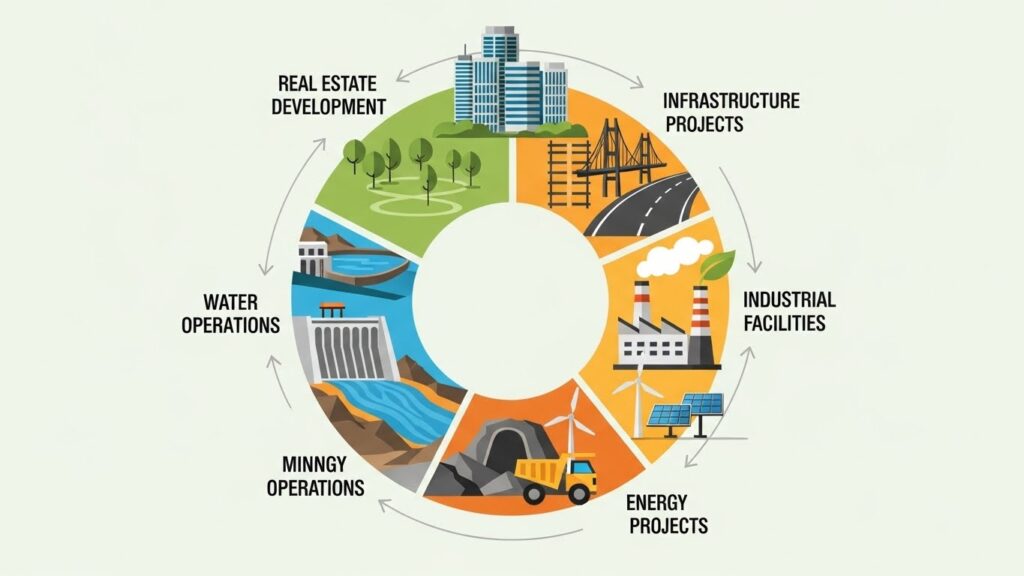
Projects commonly requiring EIA include:
- Real estate and housing estates
- Roads, bridges, and infrastructure projects
- Oil & gas facilities and pipelines
- Manufacturing plants and industrial parks
- Mining and quarrying operations
- Power plants and energy projects
- Borehole fields and large water schemes
The Federal Ministry of Environment classifies projects into three categories: Category I (mandatory full Environmental Impact Assessment, EIA), Category II (partial EIA/Environmental and Social Impact Assessment, ESIA), and Category III (exempted projects), depending on the environmental risk.
Step-by-Step EIA Approval Process in Nigeria
1. Project Screening
The project is reviewed to determine whether a full EIA, partial EIA, or exemption applies.
2. Scoping and Terms of Reference (ToR)
Key environmental issues are identified, and a ToR is approved by FMEnv.
3. Baseline Environmental Studies
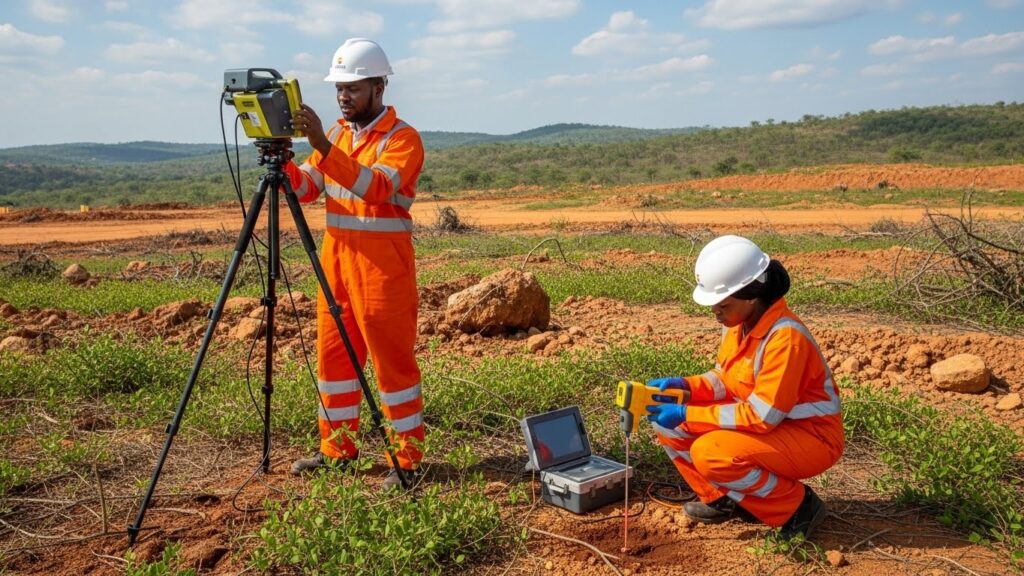
Field studies covering air, water, soil, ecology, and socio‑economic conditions are conducted.
4. Impact Assessment and Mitigation Planning
Potential negative impacts are analyzed, and Environmental Management Plans (EMP) are developed.
5. Public Consultation and Disclosure
Stakeholders and host communities are engaged as required by law.
6. Report Submission and Review
The EIA report is submitted to FMEnv for technical review and decision‑making.
7. Approval and Certification
Upon satisfactory review, an EIA Approval Certificate is issued.
Typical review timelines range from 30 to 90 working days, depending on project complexity and documentation quality.
Common Reasons EIA Applications Are Delayed or Rejected
Many projects experience delays due to:
- Poor baseline data collection
- Inadequate public consultation
- Non‑compliance with FMEnv guidelines
- Inexperienced or unaccredited consultants
- Weak mitigation and monitoring plans
Early engagement with a professional environmental consultancy significantly reduces these risks.
Why Professional EIA Consultancy Matters
EIA is both a technical and regulatory process. Experienced consultants understand:
- Nigerian environmental laws and approval pathways
- Federal vs state jurisdiction requirements
- Field data accuracy and scientific integrity
- Stakeholder engagement best practices
How Solo‑May Geoservices Adds Value

Solo‑May Geoservices provides integrated environmental and geoscience solutions that support successful EIA approvals, including:
- Environmental Impact Assessment (EIA & ESIA)
- Baseline environmental studies
- Geophysical and hydrogeological investigations
- Environmental Management Plans (EMP)
- Regulatory liaison and documentation
By combining environmental science with geoscience expertise, Solo‑May Geoservices ensures that EIA reports are technically sound, regulator‑ready, and defensible.
Benefits of EIA Beyond Compliance
A well‑executed EIA:
- Prevents costly project delays and shutdowns
- Improves investor and lender confidence
- Protects community relationships
- Enhances long‑term sustainability
- Strengthens corporate reputation and ESG performance
In today’s Nigerian business environment, EIA is not just about approval—it is about project resilience and responsible development.
Call to Action for Developers, Investors, and Project Owners
Whether you are planning a housing estate, real estate development, factory, warehouse, industrial plant, road, power project, or other infrastructure, addressing Environmental Impact Assessment early can save significant cost, time, and regulatory stress.
Solo-May Geoservices supports a wide range of projects across Nigeria with:
- Environmental Impact Assessment (EIA) and Environmental & Social Impact Assessment (ESIA)
- Baseline environmental and geoscience investigations
- Support for housing, real estate, industrial, infrastructure, and energy projects
- Regulatory liaison with the Federal Ministry of Environment and state authorities
- Practical Environmental Management Plans that keep projects compliant and on schedule
Engaging the right expertise from the outset protects your investment and strengthens project sustainability.
Contact Solo-May Geoservices for professional EIA support and compliance assurance.
Frequently Asked Questions (FAQ)
- Is Environmental Impact Assessment (EIA) mandatory in Nigeria?
Yes. Under the Environmental Impact Assessment Act, many projects in Nigeria must obtain EIA approval before construction begins, especially developments that may significantly affect the environment or communities.
- Which projects require EIA approval in Nigeria?
Projects commonly requiring EIA include housing estates, real estate developments, factories, industrial facilities, roads, power projects, mining operations, and oil & gas infrastructure, depending on scale and location.
- How long does it take to obtain EIA approval in Nigeria?
EIA approval timelines typically range from 30 to 90 working days, depending on project complexity, quality of documentation, and regulatory review processes.
- Can construction start while EIA approval is in progress?
No. Commencing construction without EIA approval is illegal and often results in stop-work orders, fines, and project delays.
- Who issues EIA approval in Nigeria?
EIA approvals are issued by the Federal Ministry of Environment (FMEnv) or relevant state environmental authorities, depending on project type and jurisdiction.
- Why should I engage a professional EIA consultant?
Professional consultants ensure accurate baseline studies, proper stakeholder engagement, compliance with regulatory guidelines, and faster approval, reducing the risk of rejection or delays.
Final Thoughts
Across housing estates, real estate developments, factories, infrastructure, and energy projects, many challenges arise not because approvals are unattainable, but because environmental considerations are introduced too late. When EIA is approached early and strategically, it supports smoother approvals, better stakeholder relationships, and long-term project stability.
Need EIA support in Nigeria?
Contact Solo‑May Geoservices today for professional guidance, compliance assurance, and sustainable project delivery.