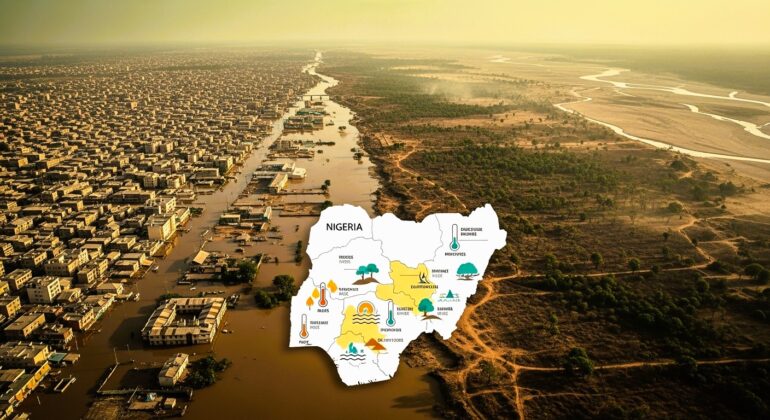

Nigeria’s weather patterns in late 2025 and early 2026 have departed dramatically from long-standing seasonal norms. Rather than the cooler, dusty air associated with the harmattan, many regions — including Lagos, Abuja, Kebbi, and Yola — experienced prolonged heatwaves with daytime temperatures exceeding 40°C (104°F). These extremes are not mere weather anomalies but are tied to broader climate shifts with deep consequences for public health, urban infrastructure, agriculture, and environmental planning.
A Real Story: When the Heat Took Over
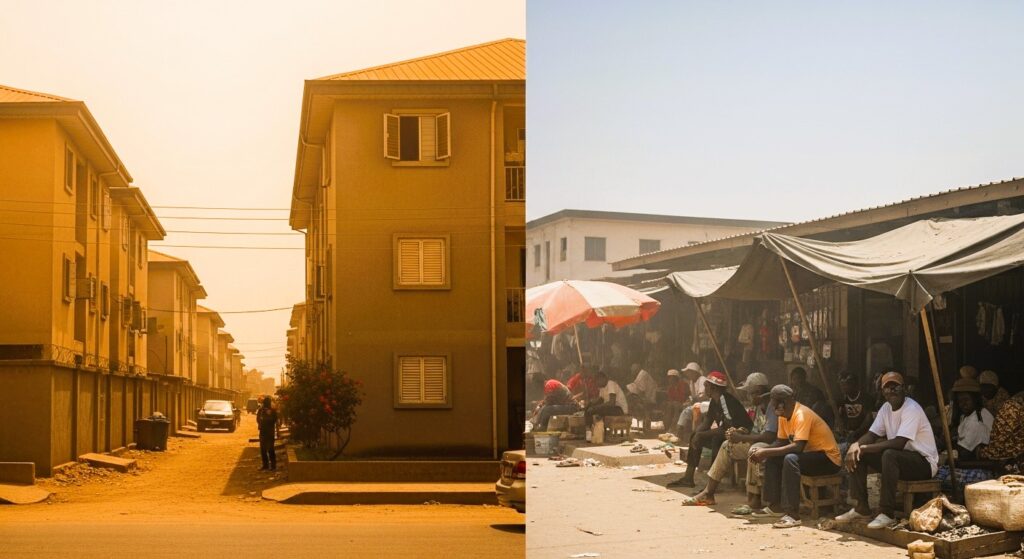
In July 2025, residents of Sokoto, Maiduguri, and Abuja awakened to blistering heat that felt unrelenting, more like a furnace than a tropical climate. Markets opened earlier than usual but saw slower activity as vendors and shoppers struggled with heat exhaustion. Power outages — a persistent challenge in many Nigerian cities — further worsened conditions by limiting access to fans and air conditioning when they were most needed (Data Unveiled, 2025)
This experience was not isolated or anecdotal. In 2025, the Nigerian Meteorological Agency (NiMet) issued nationwide heatwave advisories, reporting that maximum daytime temperatures across several regions reached between 38 °C and 42 °C. Cities such as Sokoto, Yola, and Abuja were identified among areas experiencing prolonged heat stress, highlighting a growing pattern of increasingly frequent and intense heat events across Nigeria (Pulse Nigeria)
Why Is Nigeria Experiencing Abnormal Heat Patterns?
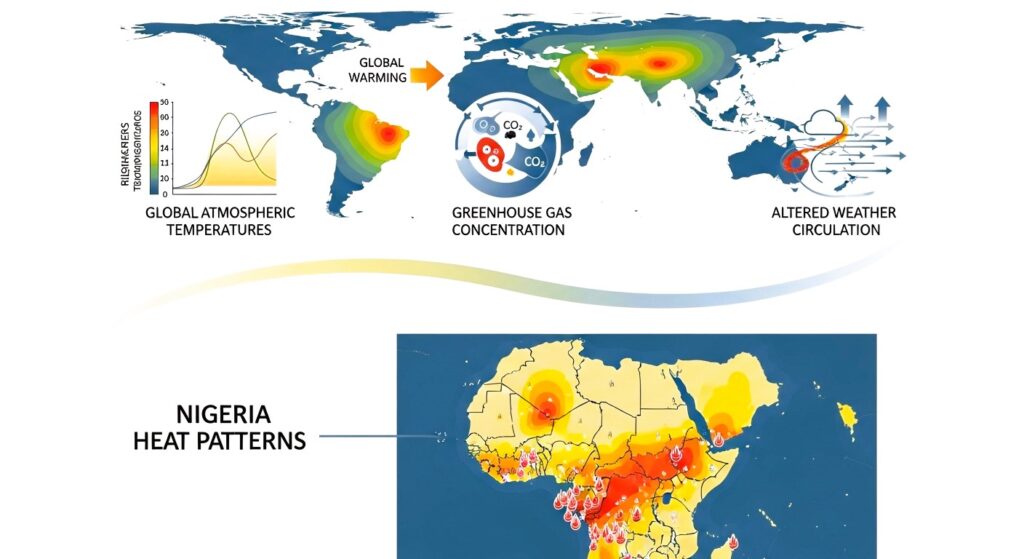
1. Global Warming and Climate Change
Rising greenhouse gas emissions have increased atmospheric temperatures globally, and Nigeria — with its tropical climate — is especially vulnerable. Climate change has also altered traditional weather cycles, making extreme heat events more frequent and severe.
2. Urban Heat Island Effect
Cities such as Lagos and Kano trap heat due to concrete surfaces and reduced vegetation, leading to “urban heat islands” where temperatures are several degrees higher than in rural areas.
3. Shifting Rainfall and Dry Spells
The Nigerian Meteorological Agency (NiMet) documented severe dry spells and delayed rainy seasons during critical agricultural months, compounding heat and drought impacts.
Health Impacts: More Than Discomfort
The surge in temperatures has serious health consequences:
Heat Stress and Heat-Related Illness
Persistent high temperatures raise the risk of dehydration, heat exhaustion, and heat stroke — especially among outdoor workers, the elderly, children, and low-income populations.
Increased Disease Burden
Extreme weather contributes to broader public health challenges. Nigeria’s Ministry of Health anticipates a rise in water-borne and vector-borne diseases due to heat and irregular weather patterns, with broader impacts on national health systems.
Agricultural Health Stress
Higher temperatures stress crops, reduce yields, and shorten growing seasons — threatening food security, nutrition, and rural livelihoods (Daily Trust)
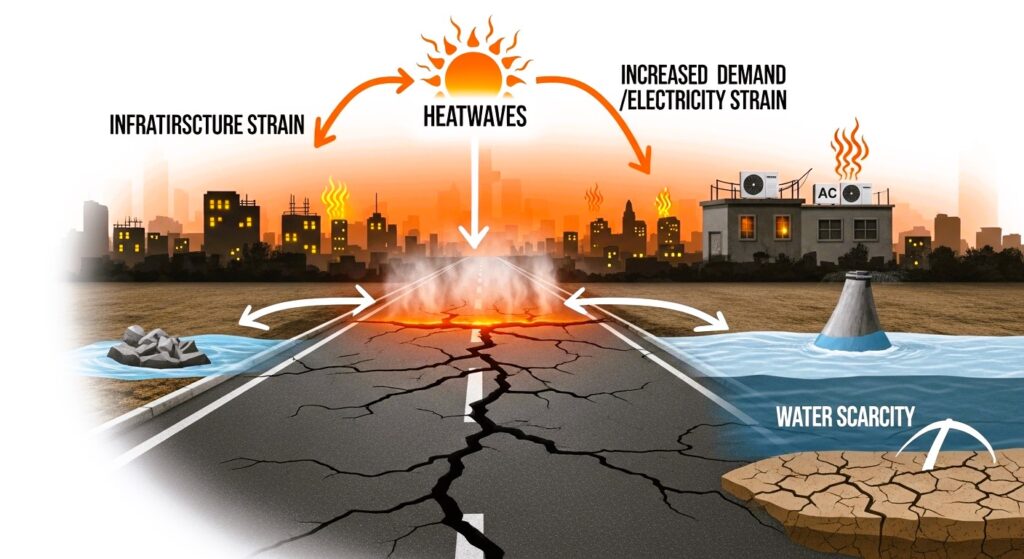
Infrastructure Under Stress
Prolonged heat waves exert profound effects on built infrastructure:
1. Roads and Transportation
High temperatures accelerate asphalt deformation and surface failure, increasing maintenance costs and safety risks.
2. Energy and Cooling Demand
With soaring temperatures, energy demand for cooling rises, straining Nigeria’s already fragile electrical grid, which struggles with frequent outages and uneven coverage.
3. Water Systems Dry spells reduce surface water availability and increase demand on groundwater — forcing expensive pumping and accelerating resource depletion.
Environmental Planning Must Evolve
The abnormal heat patterns and their cascading impacts highlight a crucial gap in traditional planning. In the past, infrastructure and urban planning in Nigeria often relied on historic climate assumptions that no longer hold. Today’s reality demands updated models that incorporate:
- Future climate projections
- Urban heat mitigation strategies
- Water resilience and drought planning
- Public health risk modelling
Failing to update planning frameworks means exposing people and assets to avoidable harm.
A Practical and Strategic Response for Nigeria
Nigeria, cities, and developers must embrace integrated environmental planning — and that begins with robust Environmental Impact Assessments (EIA) and climate risk assessments tailored to present and future conditions.
Here’s how this works in practice:
1. Enhanced Climate-Aware EIA
Traditional EIA focuses on past climate norms. Today, they must include heatwave risk, water scarcity trends, and urban heat projections, integrating:
- Local climate data
- Urban heat island modelling
- Water resources stress profiles
This builds resilience into project design, siting, and materials selection.
2. Urban Cooling and Green Infrastructure
Planning strategies such as expanding green spaces, urban tree canopies, and reflective pavement technologies can reduce urban heat islands and improve citizen health.
3. Public Health Preparedness
Heat action plans, early warning systems, and community education campaigns can cut heat-related morbidity and mortality.
Monitoring Existing Facilities and Infrastructure Under Extreme Heat Conditions
Beyond future developments, Nigeria’s current heat conditions expose a critical vulnerability in existing facilities and infrastructure. Many hospitals, hotels, industrial plants, offices, and public buildings were designed under older climate conditions that no longer reflect present realities.
As temperatures rise, environmental monitoring becomes essential to determine whether these facilities remain safe, functional, and suitable for continued use. Key parameters requiring assessment include:
- Indoor and outdoor air quality, particularly ventilation performance and particulate concentrations
- Ambient temperature and thermal comfort levels affecting occupants and equipment
- Relative humidity, which amplifies heat stress and increases risks of mould growth, corrosion, and material degradation
- Local microclimate conditions, including noise, odour, and heat retention
Without reliable monitoring data, facility operators may unknowingly expose occupants to unsafe conditions, accelerate asset deterioration, or face increased regulatory and liability risks. Proactive assessment enables targeted interventions such as ventilation upgrades, cooling optimization, shading strategies, and operational adjustments.
A Short Case Example: Heat Stress in a Healthcare Facility
During the 2025 heatwave, multiple healthcare facilities across Lagos experienced extreme ambient temperatures, leading to discomfort and operational strain. The Nigerian Meteorological Agency (NiMet) issued heat stress advisories forecasting daytime highs up to 42 °C in parts of the country, including Lagos, and cautioned that such conditions contribute to thermal discomfort, increased patient vulnerability during peak heat periods, and public health risk (Punch Newspaper)
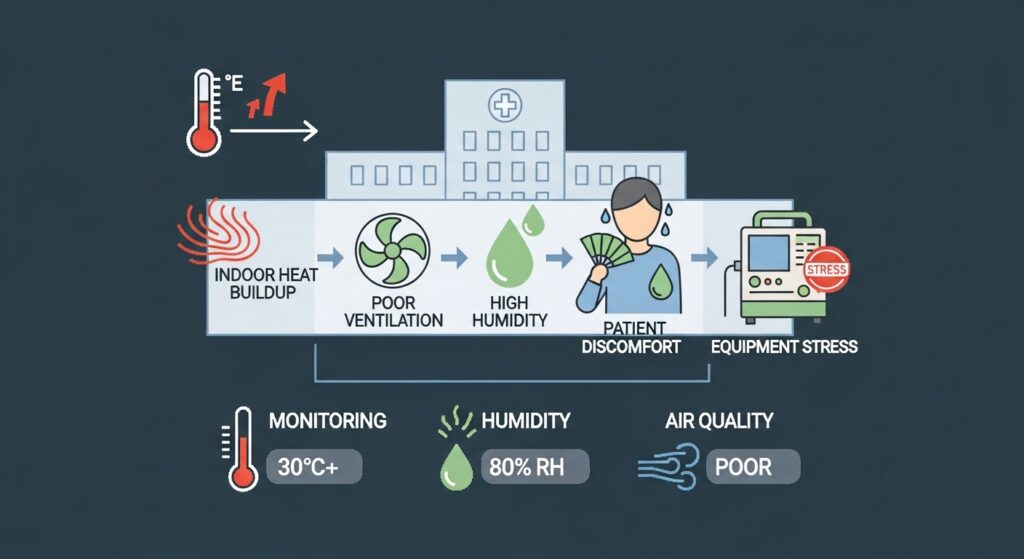
A documented instance involved private and public health facilities in Lagos where prolonged power outages during extreme heat led to reduced cooling capacity, patient discomfort, and stress on sensitive medical equipment, where adequate ventilation and stable energy are critical for patient comfort and equipment performance
Experts have also highlighted that extreme heat can increase dehydration, fatigue, and respiratory stress, underscoring the need for robust environmental monitoring and climate-adaptive facility management in healthcare settings (Nairametrics)
A Science-Driven Approach to Managing Climate and Environmental Risk
Solo-May Geoservices applies established scientific methods, regulatory frameworks, and data-driven assessment models to help governments, developers, and planners respond effectively to emerging climate and environmental challenges. Rather than reacting to environmental impacts after they occur, the approach focuses on anticipation, measurement, and risk mitigation—principles that underpin modern environmental planning globally.
Through the integration of geoscience, environmental assessment, and climate risk analysis, Solo-May delivers solutions that are technically sound, regulator-aligned, and practical for real-world project delivery.
Climate-Integrated EIA & ESIA Methodology
The firm adopts a climate-responsive Environmental Impact Assessment (EIA) and Environmental & Social Impact Assessment (ESIA) framework that goes beyond baseline regulatory requirements. This approach incorporates heat stress trends, drought exposure, rainfall variability, and long-term climate projections, ensuring that project approvals and designs remain robust under changing environmental conditions.
Evidence-Based Baseline Studies and Environmental Data Analysis
Using scientifically recognized field methods and analytical tools, Solo-May conducts detailed baseline studies covering temperature variation, air quality dynamics, soil and water resource vulnerability, and ecosystem sensitivity. These datasets form a defensible evidence base that supports resilient project planning, regulatory confidence, and informed decision-making.
Climate Risk Assessment and Infrastructure Resilience Planning
Applying structured climate risk assessment techniques to evaluate how infrastructure—such as roads, power systems, water schemes, and urban developments—may perform under increasing heat and climate stress. The outcome is a set of adaptation and resilience strategies that reduce operational risk, extend asset lifespan, and minimize future disruption.
Regulatory Alignment and Stakeholder Integration
Recognizing that effective environmental management depends on institutional coordination, Solo-May supports clients in aligning projects with national environmental regulations, climate adaptation policies, and public health considerations. This structured engagement approach facilitates smoother approvals, reduces compliance uncertainty, and strengthens stakeholder trust.
Closing Perspective
The rising and abnormal heat patterns recorded in Nigeria in late 2025 and 2026 reflect a clear shift in environmental conditions with direct implications for health, infrastructure resilience, and long-term development outcomes. These changes underscore the need for climate-informed environmental planning that goes beyond historical assumptions.
By integrating scientific assessment, regulatory compliance, and climate risk analysis, governments and developers can reduce exposure to future losses and improve project sustainability. With experienced environmental partners such as Solo-May Geoservices, climate risk can be managed proactively—supporting safer investments, resilient infrastructure, and sustainable growth.