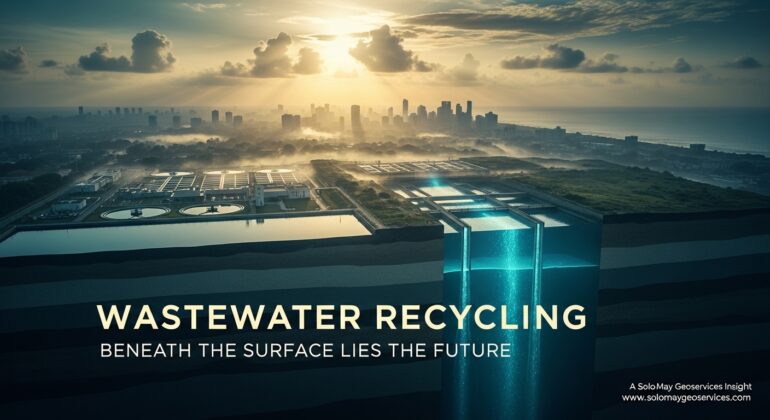

Water scarcity is no longer a distant threat — it is an unfolding reality in Nigeria and across the African continent. Rapid urbanization, climate variability, inadequate infrastructure, and rising population pressures have converged to strain freshwater systems, particularly groundwater. Groundwater, long considered a “hidden” resource, now supplies a majority of drinking water for both urban and rural communities. Yet its natural replenishment through rainfall and soil infiltration is insufficient to sustain current and future demands. This imbalance highlights the urgency of embracing innovative solutions, chief among them wastewater recycling and reuse for artificial hydrogeological recharge.
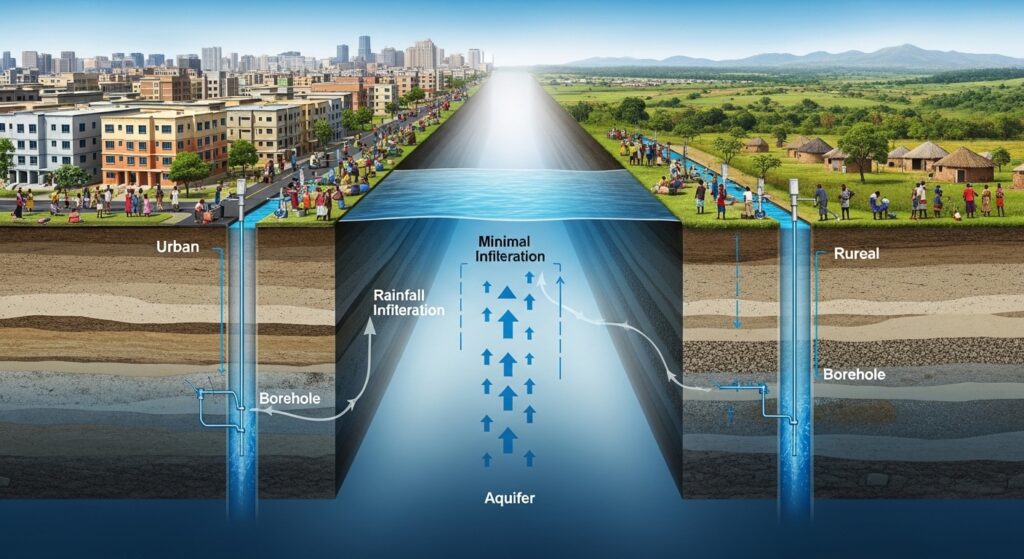
This explores why wastewater recycling needs to be central to Nigeria’s water management strategy, examines real-world practice and case studies, and offers clear solutions for sustainable implementation.
Understanding Artificial Groundwater Recharge
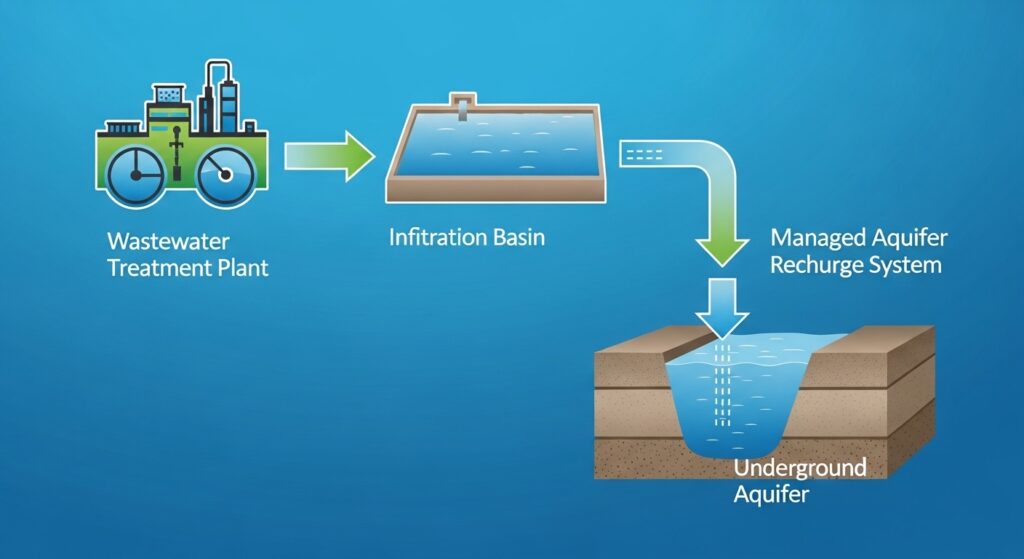
Artificial groundwater recharge is the intentional replenishment of aquifers using treated water through controlled infiltration or injection systems to improve water security and aquifer sustainability. Techniques include:
- Infiltration basins or ponds
- Injection wells
- Managed Aquifer Recharge (MAR) systems
- Soil Aquifer Treatment (SAT) systems
Unlike natural recharge, which depends on rainfall and infiltration, artificial recharge allows planners to control water quality, recharge rates, and locations, making it especially valuable in regions with variable rainfall and increasing climate stress (Waterbender)
Why Groundwater Recharge Matters in Nigeria
1. Declining Natural Recharge Rates
Urbanization has sealed large land areas with concrete and asphalt, drastically reducing natural infiltration. In cities like Lagos, Ibadan, and Abuja, storm water is rapidly channeled into drains rather than allowed to percolate into the subsurface.
At the same time, climate variability has shortened rainy seasons and increased evaporation losses, further reducing recharge potential.
2. Over-Abstraction of Aquifers
Unregulated borehole drilling and high abstraction rates have led to:
- Falling groundwater levels
- Dry or failing boreholes
- Increased pumping costs
- Saltwater intrusion in coastal aquifers
Without deliberate recharge strategies, many aquifers face long-term degradation.
3. Wastewater: From Waste to Resource
Urban wastewater generation is continuous and predictable, particularly in cities, hospitals, hotels, and industrial estates. When adequately treated to reduce pathogens and chemical pollutants, wastewater becomes a reliable and reusable source for aquifer recharge — especially through MAR or SAT systems.
Studies in major cities like Calabar show that urban expansion and impervious surfaces significantly reduce natural rainwater infiltration, directly impacting recharge rates and aquifer sustainability (ScienceDirect)
In Lagos, modelling of its coastal aquifer revealed that increasing urbanization between 2000 and 2020 resulted in a 50% reduction in simulated recharge rates, with water demand rapidly converging on the maximum natural recharge capacity (AdgeoCopernicus)
This situation is not unique to Nigeria — similar pressures are evident globally. As withdrawals outpace natural replenishment, artificial solutions become necessary to avoid depletion, land subsidence, saltwater intrusion, and long-term water insecurity (MDPI)
Why Groundwater Works
- Year-round source: Unlike rain-dependent natural recharge, wastewater recycling provides a consistent water supply even during drought.
- Improved water quality: When adequately treated, reclaimed water can improve aquifer water quality via soil filtration processes.
- Aquifer resilience: Artificial recharge increases storage capacity and buffers against seasonal and long-term water shortages.
- Reduced pressure on extraction: With replenished groundwater stores, communities and industries reduce over-dependence on costly surface water or deep boreholes (IGES)
Real-World Case Example: Managed Aquifer Recharge in Practice
- Leaky Acres Groundwater Recharge Facility in Fresno, California (Wikipedia)
- Shafdan Wastewater Reuse & MAR, Israel (Waterbender)
- Kolar district, Karnataka, India (ScienceDirect)
This case demonstrates that when wastewater is reliably treated and distributed for recharge, communities can achieve measurable improvements in water security and ecosystem health.
Practical Solutions for Nigeria
For Nigeria to harness the full potential of wastewater recycling as a tool for artificial recharge, a multi-pronged approach is needed:
1. Strengthen Treatment Infrastructure
Wastewater must meet strict quality standards before it is reused for recharge. Investments in tertiary treatment, including filtration, disinfection, and nutrient removal are vital. This ensures that recharged water poses minimal risk to groundwater quality and public health.
2. Deploy Managed Aquifer Recharge (MAR) Systems
MAR involves engineered structures like recharge wells, infiltration basins, and recharge trenches deliberately designed to enhance infiltration of treated water into aquifers. In urban contexts, such systems can use existing stormwater infrastructure to maximize recharge without conflicting with flood control goals.
3. Integrate Water Reuse in Urban Planning
Wastewater reuse and recharge must be woven into urban water management frameworks from city development plans to utility operations. This includes recognizing recharge as a core component of Integrated Urban Water Management (IUWM), ensuring that surface water, groundwater, and wastewater systems are managed together.
4. Build Community Trust and Awareness
Studies in Nigeria show that communities understand the benefits of wastewater reuse but may be hesitant about schemes involving direct human contact. Education campaigns and transparent water quality monitoring can build public confidence.
5. Policy and Regulation
Clear regulatory frameworks are essential to govern wastewater reuse and groundwater recharge. This includes water quality standards, monitoring regimes, and incentives for utilities needed to unlock private sector participation and investment.
Nigeria’s Regulatory Framework and Mandate
The National Environmental Standards and Regulations Enforcement Agency (NESREA) is the primary federal body responsible for enforcing environmental laws and standards in Nigeria, including those related to water quality, pollution control, and sustainable resource management (NESREA)
Under NESREA’s mandate:
- Environmental compliance monitoring across sectors is mandatory
- Industries and facilities must implement pollution control and waste management systems
- Environmental audits, permits, and compliance reporting are required for lawful operation
- NESREA’s regulations include provisions for Surface and Groundwater Quality Control and related environmental protection frameworks (NESREA Regulations)
Strengthening compliance with these regulations — including wastewater treatment and recycling — is essential before any recharge initiative is undertaken.
The Role of Geoservices Firms like Solo-May Geoscience Expertise
As Nigeria builds resilient water systems, geoservices companies are strategic enablers — offering expertise in subsurface characterization, hydrogeological modelling, and design of recharge systems. Specifically, firms like Solo-May Geoservices can:
- Assess aquifer characteristics to identify ideal recharge zones
- Design and model MAR systems to optimize recharge rates
- Monitor groundwater quality and quantity to evaluate performance
- Support regulatory compliance and risk management frameworks
Your work ensures that recharge initiatives are grounded in solid geology, robust data, and sustainable engineering.
Conclusion: Turning a Growing Problem into a Strategic Solution
Nigeria stands at a pivotal moment in its water resource history. The traditional model of extraction without replenishment is no longer viable. Wastewater recycling for artificial groundwater recharge is not just an environmental option — it is a strategic necessity. It stands as one of the most practical and scientifically supported solutions to confront groundwater depletion in Nigeria. When wastewater is treated, monitored, and managed carefully it becomes a valuable water resource rather than a liability.
The key question is no longer whether Nigeria can afford to adopt such solutions, but whether it can afford not to — particularly as the nation strives for environmental sustainability and water security.
Need expert guidance on wastewater recycling, groundwater recharge, or regulatory compliance in Nigeria?
Speak with environmental and hydrogeology specialists at Solo-May Geoservices for science-driven, NESREA-aligned solutions.