
Understanding the Ground Before You Build
A building may look strong above ground, but its long-term stability begins with what lies beneath it.
Before concrete is poured, blocks are laid or columns are erected, one question needs to be answered: what can the ground beneath the proposed building actually support? Soil is not a uniform construction material. Its strength, density, moisture condition, compressibility and other engineering properties can vary significantly across a site. This is why understanding the ground is a critical part of foundation planning and not a step to be left until problems appear. The Nigerian Building and Road Research Institute (NBRRI) states that soil properties should be analysed during the design stage because soil properties influence the suitability of a site for construction. NBRRI
What Is a Geotechnical Investigation?
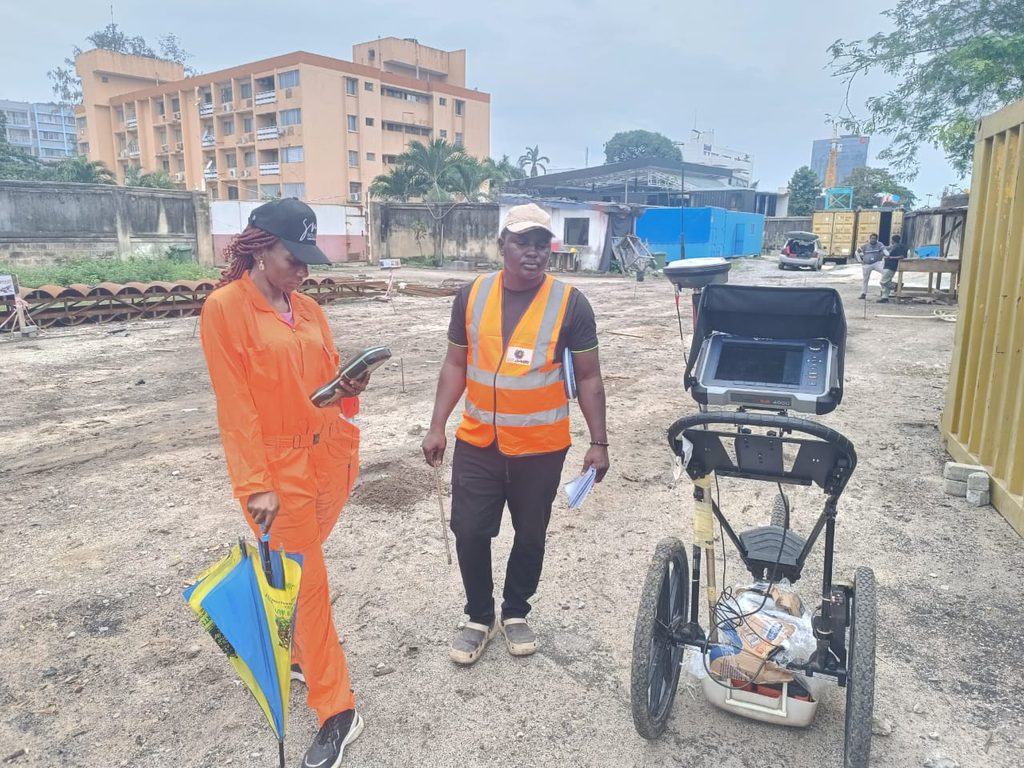
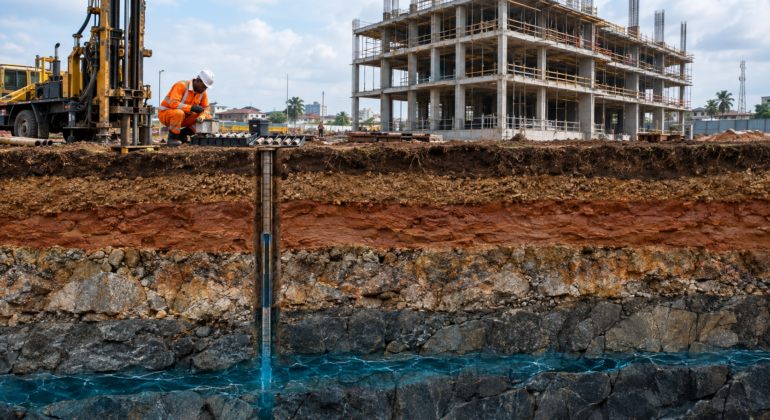
A geotechnical investigation is the systematic study of the soil, rock and groundwater conditions beneath a construction site. Its purpose is to establish information needed for engineering design and construction decisions. ASTM International’s D420-18 Standard Guide for Site Characterization for Engineering Design and Construction Purposes states that site characterization should identify and locate significant soil and rock types and groundwater conditions and establish the characteristics of subsurface materials through sampling, in-situ testing, or both. The guide also identifies foundation type and suitable bearing strata among the decisions that site characterization can support.
In practical terms, the investigation helps the project team move from assumptions about the ground to site-specific information obtained through investigation and testing. ASTM notes that site characterization may require soil and rock samples of sufficient quality to determine their classification and engineering properties relevant to the proposed design. ASTM International
Why Does Soil Testing Matter?
The foundation transfers the load of a building into the ground. If the soil cannot adequately support that load or undergoes excessive deformation, the resulting movement can affect the structure.
NBRRI states that geotechnical investigation testing provides information relevant to foundation design, bearing capacity, settlement analysis and excavation planning. These are not theoretical concerns; they are engineering factors that must be considered when determining how a structure should interact with the ground.
A 2024 Nigerian study from one of the universities in Nigeria also demonstrates why testing matters. The researchers conducted in-situ and laboratory investigations and found that bearing-capacity results alone were not sufficient for their study area because settlement considerations affected the foundation assessment. The final foundation recommendations were therefore based on both bearing capacity and settlement behaviour. Geotechnical investigation of soil bearing capacity
What Does a Geotechnical Investigation Examine?
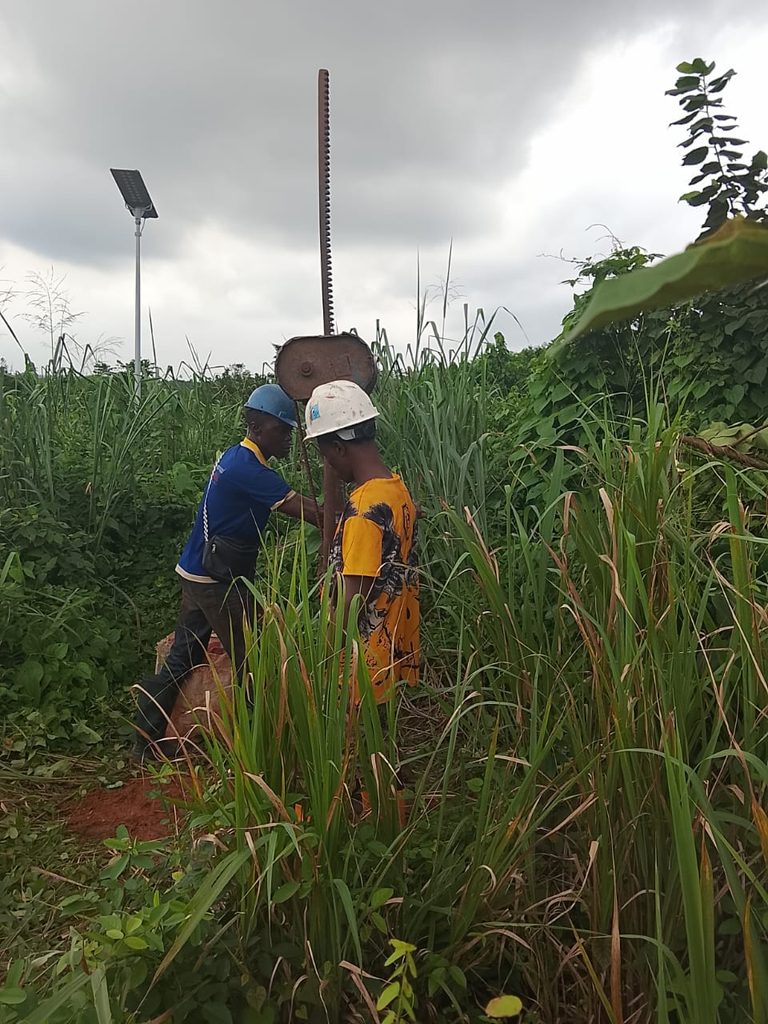
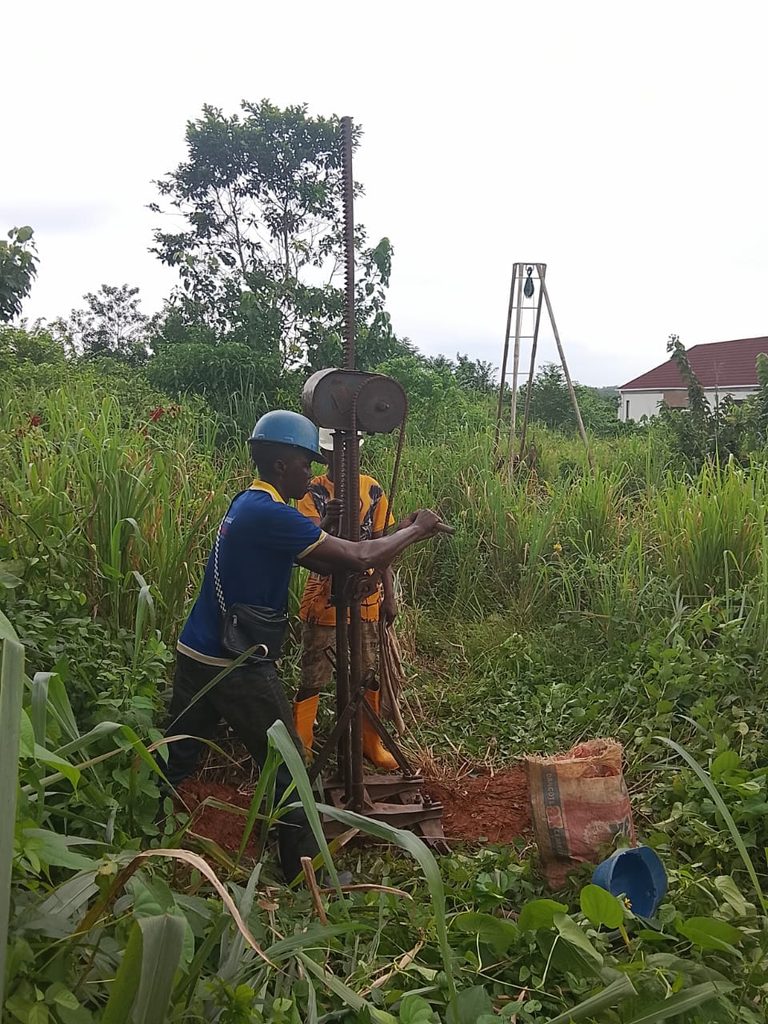
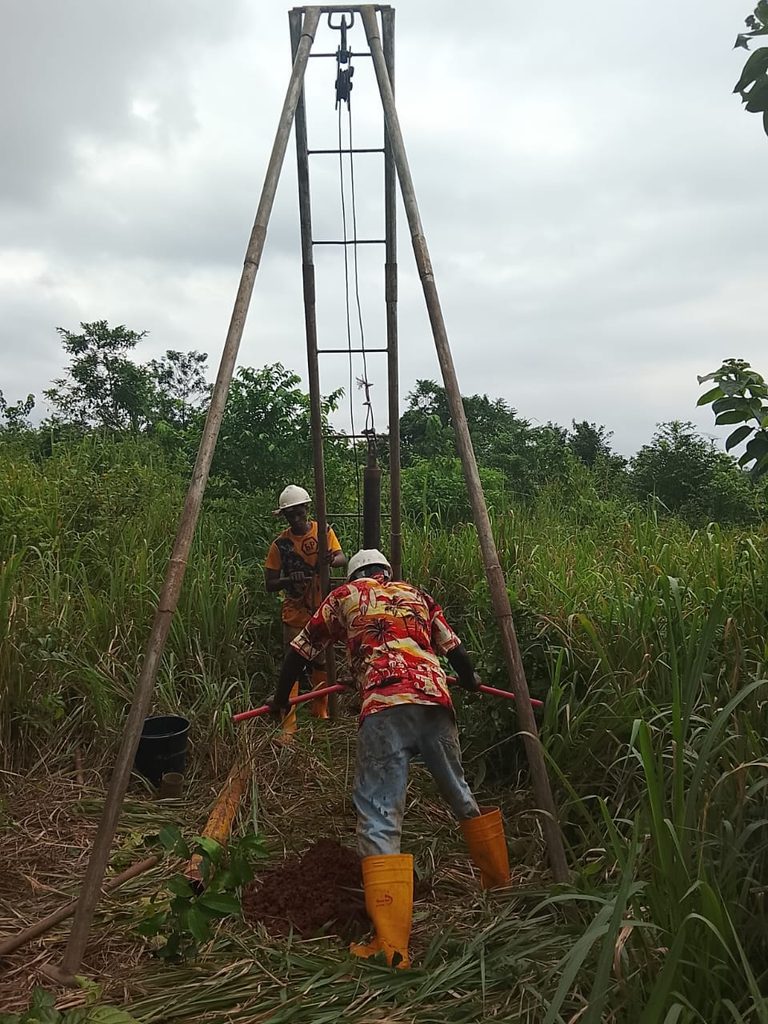
The exact scope of a geotechnical investigation depends on the project, site conditions and information required for design. However, it may involve soil sampling, field investigation, in-situ testing and laboratory analysis to establish the engineering characteristics of the ground.
NBRRI’s soil-testing services include soil sampling, Atterberg limits, particle-size distribution, compaction, direct shear, consolidation, triaxial testing and soil permeability, among others. Each test provides different information about the engineering behaviour of soil.
For example, particle-size analysis provides information used for engineering classification of soil; Atterberg limit tests determine critical water contents of fine-grained soils; consolidation testing determines the rate and magnitude of consolidation; and direct shear and triaxial tests provide information about soil strength and stress-strain behaviour. FHWA – Geotechnical site characterization
Groundwater Matters Too
Soil is only part of the subsurface picture. Groundwater conditions can also influence construction and foundation decisions.
ASTM D420-18 identifies groundwater conditions as part of site characterization and notes that information on soil-water conditions, pore pressure and permeability may be needed when considering excavation, dewatering and foundation selection. ASTM
This is particularly important where excavation may encounter groundwater or where groundwater conditions could affect construction and the behaviour of subsurface materials. The Federal Highway Administration identifies groundwater conditions and potential groundwater seepage as fundamental considerations in geotechnical analyses and design, and notes that groundwater levels and pressures should be evaluated as part of geotechnical investigations. FHWA – Groundwater Investigations
TO BE CONTINUED…
In Part 2, we look at why soil conditions from a neighbouring property cannot automatically be used for foundation decisions, when geotechnical investigation should be carried out, and how the results influence foundation planning.