
For many Nigerians, recurring stomach pain, heartburn, nausea or discomfort may quickly be described as “ulcer.” But recent conversations surrounding cancer have reminded the public of an important lesson: persistent or unusual symptoms should not simply be self-diagnosed.
But beyond the question of “ulcer or cancer?”, there is another question Nigerians should be asking:
What are we breathing, drinking and being exposed to every day?
This is where environmental health and environmental monitoring become important.
The Environment Around Us Matters
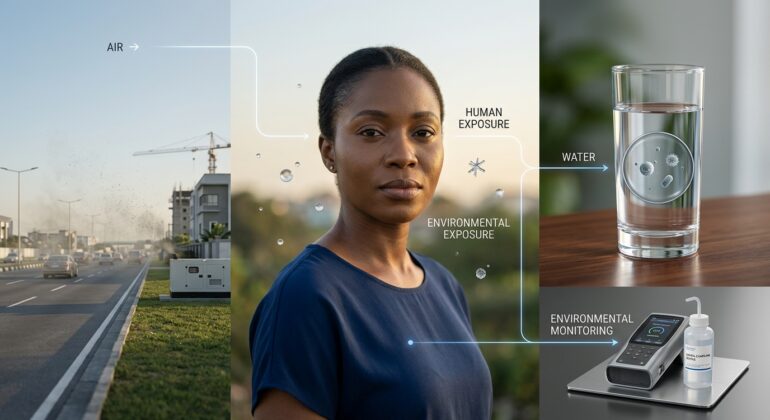
The environment in which people live, and work can influence their exposure to pollutants through air, water and other environmental pathways.
Air pollution is particularly important. The World Health Organization identifies air pollution as a significant environmental health risk, while the International Agency for Research on Cancer (IARC) has classified outdoor air pollution and particulate matter as carcinogenic to humans.
This does not mean that everyone exposed to polluted air will develop cancer. Rather, it highlights the importance of reducing unnecessary exposure and monitoring environmental conditions as part of responsible environmental management.
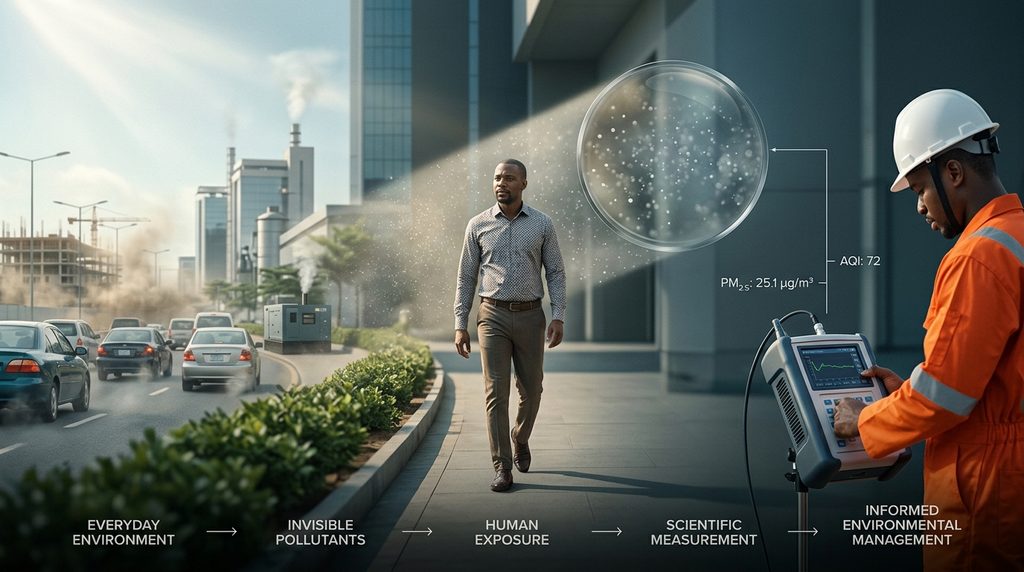
In urban and industrial environments, air pollution can come from several sources, including vehicle traffic, power generation, industrial activities, construction and resuspended dust.
For businesses and facilities, understanding these potential sources through professional air-quality monitoring can provide reliable data for identifying environmental conditions, supporting compliance and informing appropriate control measures. WHO Global Air Quality Guidelines
What Are We Breathing?
Indoor and outdoor air quality can vary depending on the surrounding environment and activities taking place within a facility.
Particulate matter such as PM₂.₅ and PM₁₀ is particularly important because these particles can penetrate deep into the lungs. Other pollutants of concern include nitrogen dioxide (NO₂), sulphur dioxide (SO₂) and carbon monoxide (CO).
For indoor environments, Nigeria’s National Environmental (Air Quality Control) Regulations also provide requirements for parameters including PM₁₀, CO, NO₂, formaldehyde and total volatile organic compounds (TVOC) in offices and public places.
In facilities such as hospitals, hotels, offices, schools and industrial workplaces, environmental monitoring can provide useful information about existing air-quality conditions and help identify areas that may require attention.
This is not about diagnosing disease. It is about measuring the environment, identifying potential environmental risks and providing reliable data to support appropriate management decisions.
Routine air-quality monitoring can therefore form part of a broader environmental management strategy, particularly in facilities where people spend long periods indoors or where combustion, industrial and other pollutant-generating activities occur. Air Quality, Energy & Health | NESREA-Air Quality ControlNESREA-Air Quality Control
What About the Water We Drink?
Environmental exposure is not limited to the air.
Water quality is another important part of environmental health, particularly in communities and facilities that depend on groundwater, boreholes or other water sources.
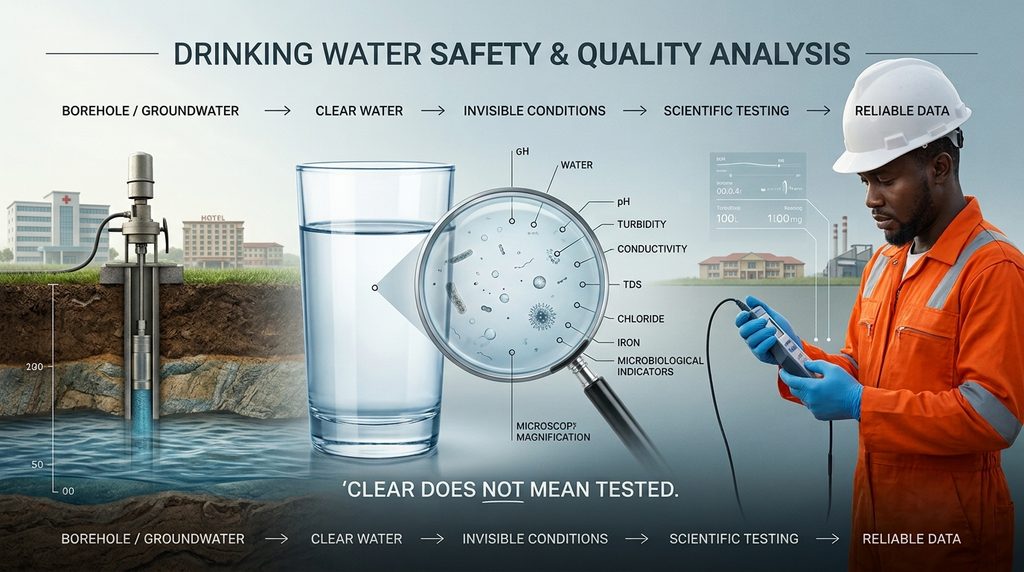
Water may appear clear and still require testing. Parameters such as pH, turbidity, conductivity, total dissolved solids, chloride, iron and microbiological indicators can provide information about water quality and help identify changes that may not be visible.
For hospitals, hotels, schools, residential developments and industrial facilities, regular water-quality assessment can support safer water management, operational decision-making and environmental compliance.
This is particularly important where boreholes or groundwater serve as major sources of water. Testing provides evidence about the condition of the water source rather than relying on appearance, taste or assumptions. WHO-Guidelines for Drinking-Water Quality
Environmental Monitoring Is About Prevention, Not Panic
Environmental monitoring should not be approached from a position of fear.
The objective is not to tell people that their environment is “causing cancer.” The objective is to measure environmental conditions, identify potential risks and provide reliable information for appropriate action.
For businesses and institutions, this can mean identifying poor indoor air conditions, changes in water quality, pollution sources or operational practices that require corrective measures.
It can also support environmental compliance and responsible facility management.
This preventive approach is consistent with the direction of Solo-May Geoservices’ existing environmental work, where monitoring is presented not merely as a regulatory requirement but as a tool for risk management, operational resilience and sustainable business performance.
What Should Organizations Be Doing?
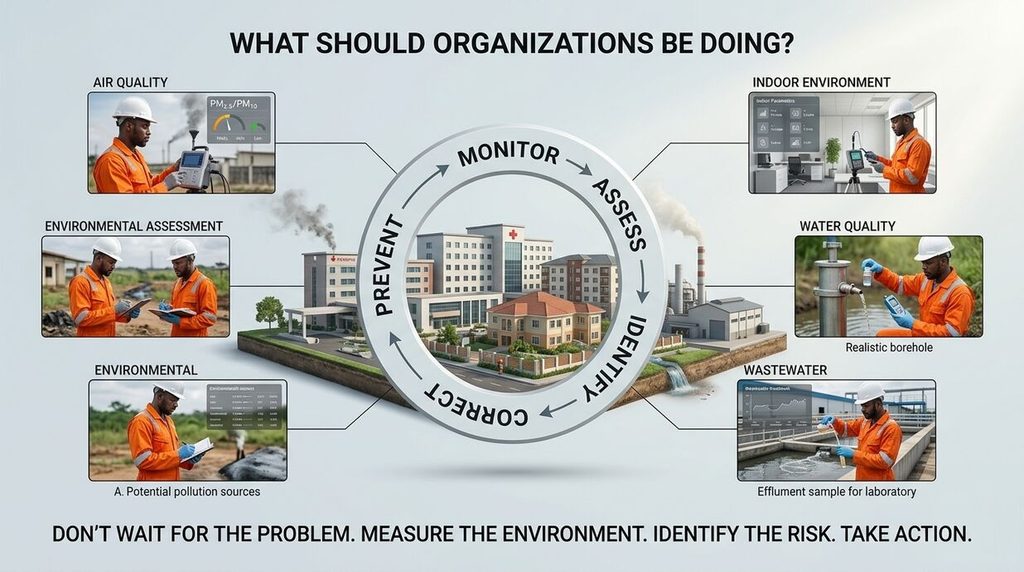
Organizations should move beyond waiting for an environmental problem before taking action.
Depending on the nature of the facility and its activities, an environmental management programme may include:
- Routine air-quality monitoring.
- Indoor environmental assessment.
- Potable and groundwater-quality testing.
- Wastewater monitoring.
- Environmental impact and compliance assessments.
- Identification of potential pollution sources.
- Appropriate corrective and preventive measures.
The specific parameters and frequency of monitoring should be determined by the facility’s activities, environmental risks and applicable regulatory requirements.
The goal is simple: know the condition of your environment before a preventable problem becomes a serious one. Contact Solo-May Geoservices to schedule a site investigation.
The Bigger Conversation: From Awareness to Action
The current ulcer-and-cancer conversation should encourage Nigerians to take persistent health concerns seriously and seek appropriate medical attention. But it should also remind organizations and communities that environmental conditions deserve attention.
Cancer cannot be diagnosed through an air-quality monitor. Ulcer cannot be diagnosed through a water-quality test. Environmental monitoring and medical diagnosis serve different purposes.
What environmental monitoring can do is provide scientifically useful information about the conditions people are exposed to and help organizations make better decisions about environmental management, compliance and risk reduction.
From air-quality monitoring and water-quality testing to environmental assessment and compliance support, Solo-May Geoservices combine environmental expertise, scientific monitoring and practical solutions to help organizations understand their environmental conditions and manage potential risks. our focus is on providing reliable data that supports healthier environments, informed decision-making and sustainable operations.
Because when it comes to environmental health, the best time to identify a potential risk is before it becomes a bigger problem.