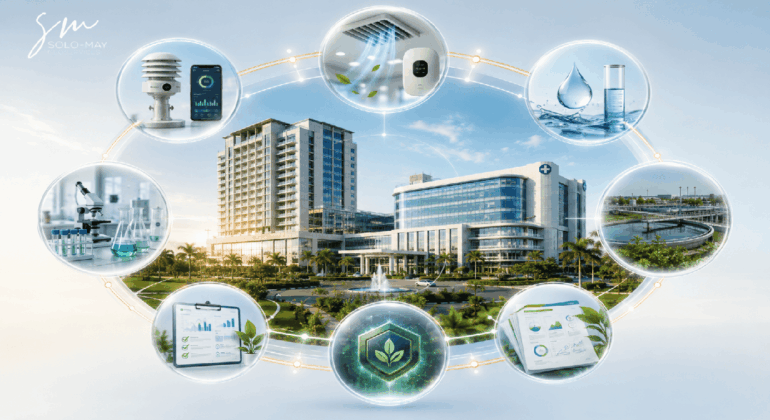

Imagine welcoming guests into your hotel only to receive complaints about discoloured tap water, unpleasant indoor air, or persistent odours in guest rooms. Now imagine managing a healthcare facility where poor ventilation compromises patient safety, or inadequate water quality raises concerns about hygiene and safety. In both situations, the consequences extend far beyond customer dissatisfaction, it can affect public confidence, operational efficiency, regulatory compliance, and ultimately, your organization’s reputation. WHO-Water, sanitation and health

As Nigeria’s commercial capital continues to grow, Lagos faces increasing environmental pressures driven by rapid urbanization, dense population, and expanding commercial activities. To protect public health and the environment, the Lagos State Environmental Protection Agency (LASEPA) oversees environmental compliance through inspections, environmental monitoring, laboratory services, and enforcement where necessary. For facility owners and managers, environmental monitoring is therefore not simply about satisfying regulatory requirements; it is an essential component of risk management, operational resilience, and sustainable business performance. Lagos State Environmental Protection Agency (LASEPA)
Key Takeaways
Before diving into the details, here are the key points every hotel owner, hospital administrator, and facility manager should know:
- Environmental compliance is more than a regulatory requirement, it is essential for protecting public health, maintaining business continuity, and preserving your organization’s reputation.
- Routine air quality, water quality, and wastewater monitoring help identify environmental risks before they become costly operational problems.
- Poor environmental management can lead to increased maintenance costs, service disruptions, reputational damage, and regulatory enforcement.
- Hotels and healthcare facilities face unique environmental challenges due to high occupancy, complex water systems, commercial operations, and the need to protect vulnerable occupants.
- Proactive environmental monitoring is a smart investment that supports healthier indoor environments, safer water systems, improved operational efficiency, and long-term sustainability.
- Partnering with experienced environmental consultants helps organizations make informed decisions, strengthen compliance, and implement practical solutions based on reliable scientific data.
Why Environmental Compliance Should Be a Business Priority
Hotels depend on clean water, fresh indoor air, and efficient wastewater systems to deliver exceptional guest experiences. A single environmental issue, whether it is poor indoor air quality, unpleasant water quality, or wastewater management failure, can quickly affect customer satisfaction, online reviews, and brand reputation.
Healthcare facilities face even greater responsibility. Patients, particularly those with weakened immune systems, rely on healthcare environments that minimize environmental risks. Clean indoor air, safe water, and effective environmental management contribute to safer healthcare delivery and support infection prevention practices. WHO-Air pollution
The Hidden Costs of Environmental Non-Compliance

The consequences of neglecting environmental monitoring often extend well beyond regulatory concerns.
- Operational disruptions can occur when water systems, ventilation equipment, or wastewater treatment facilities develop problems that could have been detected through routine monitoring.
- Reputational damage is equally significant. Today’s guests and patients expect facilities to demonstrate high environmental and hygiene standards. Negative experiences linked to poor environmental conditions can spread rapidly through online reviews and social media, making reputation recovery far more expensive than preventive monitoring.
- Perhaps most importantly, environmental problems can compromise the health, comfort, and confidence of everyone who uses the facility. According to the World Health Organization (WHO), safe water, sanitation, hygiene, and healthy indoor environments are fundamental components of public health and quality healthcare. Likewise, professional guidance from ASHRAE emphasizes that proper ventilation and indoor air quality are essential for maintaining healthy buildings.
Environmental Monitoring: A Smart Investment, Not Just a Compliance Requirement
Regular environmental monitoring gives facility managers the information they need to identify risks early, make informed decisions, and maintain safe operating conditions.
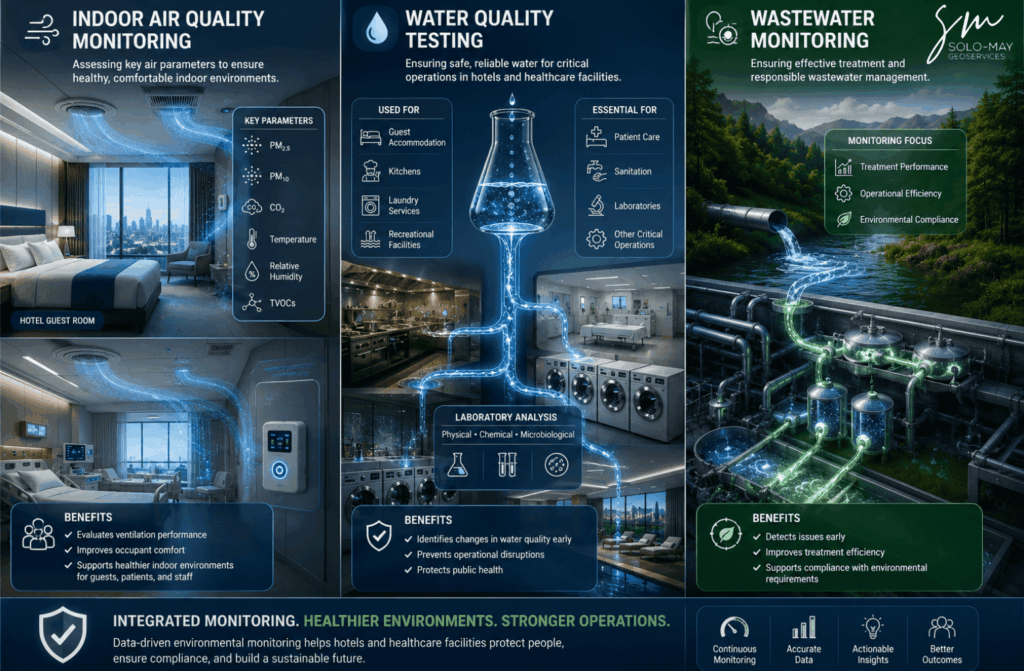
Indoor Air Quality Monitoring involves assessing parameters such as particulate matter (PM₂.₅ and PM₁₀), carbon dioxide (CO₂), temperature, relative humidity, and, where necessary, total volatile organic compounds (TVOCs). Monitoring these indicators helps evaluate ventilation performance, improve occupant comfort, and support healthier indoor environments for guests, patients, and staff.
Water Quality Testing is equally critical. Hotels require safe water for guest accommodation, kitchens, laundry services, and recreational facilities, while healthcare facilities depend on reliable water quality for patient care, sanitation, laboratories, and other essential operations. Routine laboratory analysis of physical, chemical, and microbiological parameters helps identify changes in water quality before they affect operations or public health.
Wastewater Monitoring ensures that treatment systems continue to perform effectively and that wastewater is managed responsibly. Regular assessment enables facilities to identify operational issues early, improve treatment efficiency, and support compliance with applicable environmental requirements. EPA-Indoor air quality
Why Hotels and Healthcare Facilities Cannot Afford to Wait
In today’s competitive environment, organizations that invest in proactive environmental management are better positioned to protect their reputation, improve operational efficiency, and build confidence among guests, patients, regulators, and other stakeholders.
The true cost of environmental non-compliance is rarely measured only in fines or corrective actions. It is reflected in damaged reputations, unexpected operational costs, avoidable risks, and lost opportunities. Investing in routine air quality monitoring, water quality testing, and wastewater assessment is therefore more than a compliance measure, it is a strategic investment in the long-term success of your facility.
Working in a safe environment
The true cost of environmental non-compliance is rarely measured only in fines or corrective actions. It is reflected in damaged reputations, unexpected operational costs, avoidable risks, and lost opportunities. Investing in routine air quality monitoring, water quality testing, and wastewater assessment is therefore more than a compliance measure, it is a strategic investment in the long-term success of your facility.
At Solo-May Geoservices, we help organisations move beyond compliance by delivering reliable environmental monitoring solutions that protect people, support informed decision-making, and promote sustainable business operations.
Contact Solo-May Geoservices to schedule a consultation